

Principle of Convenience for Customers
- Easy to See and Take:
- Medicines should be displayed at positions where they are easily visible and accessible to customers. Generally speaking, the best display positions are at the height parallel to customers' line of sight, usually around 1.3 - 1.7 meters. For example, commonly used cold medicines and antipyretics should be placed in this prime area so that customers can easily see and take them without having to bend down or stand on tiptoe.
- The aisles between the shelves should be wide enough for customers to push carts or walk around. Usually, the width of the main aisle should not be less than 1.2 meters, and that of the secondary aisle should not be less than 0.9 meters, so that customers can move freely in the store without feeling crowded or inconvenienced.
- Clear Classification:
- Medicines should be classified and placed according to their functions, dosage forms, etc. For example, all digestive system medicines are placed in one area, and cardiovascular system medicines in another. Within the digestive system medicine area, it can be further subdivided, such as stomach medicines and intestinal medicines. As for dosage forms, tablets, capsules, and oral liquids should be displayed separately to make it convenient for customers to find the medicines they need. For instance, if a customer wants to buy cough syrup, he or she can directly go to the oral liquid area to look for relevant medicines.
Principle of Promoting Sales
- Associated Display:
- Related medicines should be placed together. For example, cold medicines, antipyretics, and cough medicines should be displayed adjacent to each other. Because when customers buy cold medicines, they may also need antipyretics to deal with possible fever symptoms or cough medicines to relieve coughs. Another example is that vitamin products and calcium supplements are placed together since they are related in terms of nutritional supplementation. This display method can remind customers to buy related products, thus increasing sales.
- Highlighting Key Items:
- Medicines with higher profits or those recommended by the drugstore should be placed in conspicuous positions. For example, they can be placed on the end racks of the shelves or on the promotional racks at the entrance. The end racks are usually positions that are easily visible to customers when they turn at the aisle corners. Placing key medicines here can attract customers' attention. Meanwhile, use lighting, signs, and other means to highlight these key medicines. For example, special lighting can be set up above the medicine display racks, or eye-catching promotional labels can be used.
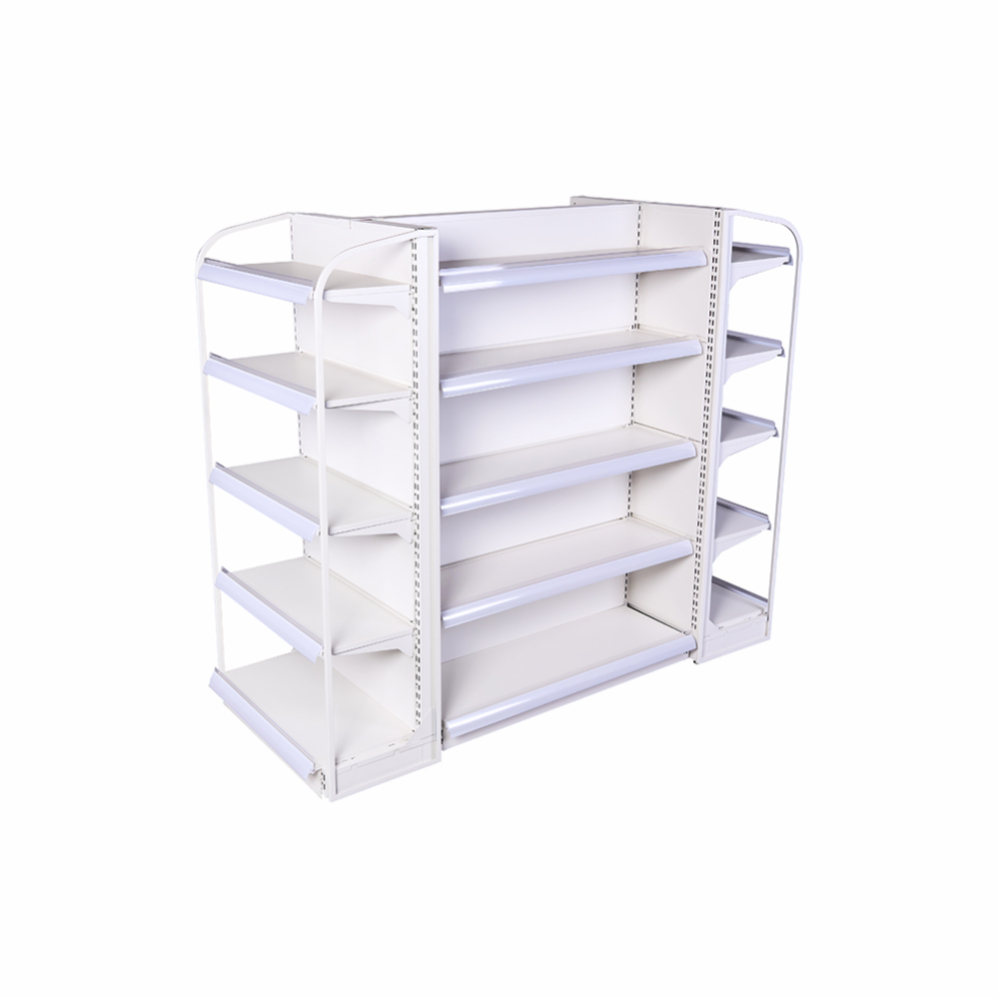
- Medicines with higher profits or those recommended by the drugstore should be placed in conspicuous positions. For example, they can be placed on the end racks of the shelves or on the promotional racks at the entrance. The end racks are usually positions that are easily visible to customers when they turn at the aisle corners. Placing key medicines here can attract customers' attention. Meanwhile, use lighting, signs, and other means to highlight these key medicines. For example, special lighting can be set up above the medicine display racks, or eye-catching promotional labels can be used.
Principle of Conforming to the Characteristics of Medicines
- Display According to Medicine Storage Conditions:
- Different medicines have different storage requirements, such as temperature, humidity, and light. Medicines that need to be refrigerated, such as biological products like insulin, should be placed in special refrigerators. For medicines that need to be protected from light, they should be placed on light-proof shelves or displayed with light-shielding packaging. For example, some medicines containing photosensitive ingredients may deteriorate and affect their efficacy if
- Display According to Medicine Expiration Dates:
- Follow the principle of "first in, first out". Medicines close to their expiration dates should be placed in the front for sale first. Newly arrived medicines should be placed at the back or on the lower layers of the shelves. This can effectively avoid losses caused by expired medicines. For example, when displaying the same kind of medicine, those with earlier production dates should be placed on the outer layer for easy access by customers, so as to ensure that the medicines are sold within their expiration dates.